Monday, August 10, 2020

Ductless Mini-Split Controls

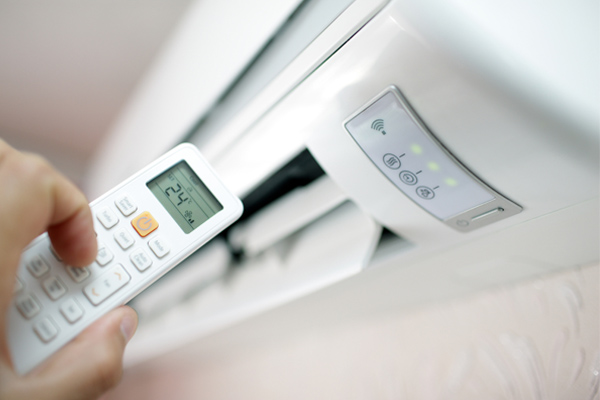
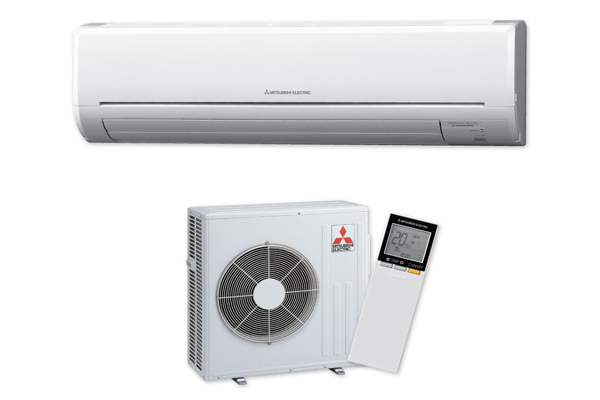
remote controller for ductless mini-split system

Lots of homeowners are making the switch to mini-split systems. They are an exceptional solution to any of your heating or cooling problems. For a mini-split to work properly, you need a controller that is compatible. Your ductless mini-split controls will ensure you use your unit’s full potential and meet the needs of your home.

The more control you have over your mini-split system means you and your family will experience more home comfort. With the right control strategy, even problem areas (sunrooms, attics, new additions) will be the temperature you want them to be.

The perfect controller will not only have your mini-split system running at optimum efficiency, but it will also allow you to meet your household’s specific preferences.

Learn More About Mitsubishi Ductless Systems Call To Schedule A Free, In-Home Estimate

What Is A Ductless Mini-Split Controls?

An HVAC controller is a device that allows you to communicate easily with your cooling and heating system. These controllers can be simple, handheld remotes with only essential functions. But they can also be more sophisticated, wireless devices that allow you to control your unit from a smartphone.

Indoor air handlers are all equipped with sensors to control heating, cooling, and dehumidification of your system. A controller is used to signal these sensors to achieve the comfort you want. The technology in the controller will then assist in maintaining that comfort level.

Mini-splits are a great solution to any heating, cooling, and energy-efficiency issues you may have. The controller lets you customize your comfort to your wants and needs. With the right controller, your mini-split will work to its full potential.

This article will go over all the different types of controls. Each controller has different capabilities, so it’s important to understand each before making a choice on which to purchase and install.

Controller Functions

image of a couple with a ductless heat pump

Different controllers have different functions depending on your specific system’s make, model, and brand. Most controllers have the following functions.

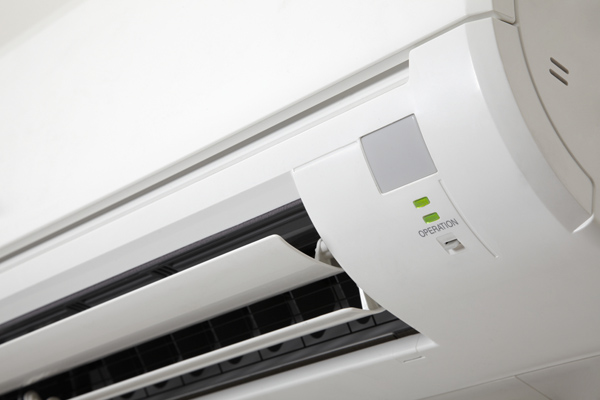
  • On/Off Display – The on/off display indicates if the unit is in operation.
  • Mode Setting – There are usually four modes available to set. They include AUTO, DRY, COOL, and HEAT. AUTO mode switches between HEAT and COOL modes. It will change to HEAT when the temperature is low and to COOL when the temperature is high.
    • DRY mode cycles the compressor on and off for a couple of minutes, depending on the room temperature. COOL is used to cool the room. HEAT mode is used to warm up the room.
  • Economical Mode – This mode activates the economy or sleep function. When in use, your system will raise the set temperature in pre-set steps. For example, the temperature increases by one degree after one hour then increase two degrees after two hours. Many people use this mode at night when they go to sleep and to help save energy.
  • Fan Speed – This mode determines the speed of the fan, Low, Medium, High, or Auto. The Auto setting automatically changes based on the room temperature.
  • Timer – The timer allows you to set how long you want your system on or off.
  • Air Louver – This function lets you direct the airflow to where you want it. Some units have a right and left louver control. Others have up or down control.
Call Today: (800) 253-9001 Learn More About How Ductless Systems Work

Basic Controls

Indoor units come with a handheld controller. But, most do not come with a smart thermostat. Those are something homeowners need to purchase separately.

A handheld controller works similarly to your TV remote. You can only communicate with one indoor unit at a time and manually control it by turning it on or off. You can set a specific temperature, and if you want the system in heating or cooling mode. It also lets you manage vane direction and airspeed. Some controllers also have timers and sensors to allow for even better convenience and comfort.

This type of controller may be perfect for you if you have a single-zone unit for a room that is infrequently used. A controller that allows you to control multiple units is helpful if you have multi-zone mini-splits.

Learn More Mitsubishi Ductless Mini-Split Systems Call To Schedule A Free, No-Obligation Consultation

Programmable Controls

ductless mini-split remote controller

If you are considering a multi-zone mini-split system, you’ll want a device to control all your indoor units from one controller. Otherwise, you’ll see that it is a hassle to manually control each individual unit.

Programmable thermostats have all of the same functions as a standard controller, but it also has a feature called automated daily settings. It allows you to set the temperature ranges you want for the day. To make sure all your units receive the settings you want, they have technology that is able to work through walls. These settings include fan speed, temperature, airflow direction, and operation mode.

To ensure capability between your controller and mini-split system, make sure they are the same brand.

Call To Schedule A Ductless Consultation

Smart Controls

Besides just scheduling set parameters, smart thermostats can do lots of other helpful things. One useful feature is real-time weather notifications and predictions. The predictions allow your unit to adjust certain settings automatically. It can also remember your preferences and anticipate the settings you want depending on the time and temperature.

Many smart thermostats come equipped with multi-zone sensors to help with home security and safety. These sensors are able to detect humidity in the home. It will make sure each room is the preferred temperature, and also control your ventilator, dehumidifier, and humidifier.

Smart thermostats also have the ability to connect with security devices such as carbon monoxide, detectors, smoke detectors, and cameras. If your home’s temperature ever reaches dangerously high or low temperatures you will receive a notification on your phone.

A disadvantage of smart controllers is that they tend to be more costly and harder to install than their counterparts. Each indoor air handler requires a smart thermostat and a thermostat adapter to be installed. Both are needed to communicate properly with one another. Something else to consider is that some smart thermostats might not work correctly with mini-split heat pumps. And even if it does work, there’s a chance of problems with its functionality and things like vane direction and fan speed, and controlling humidity.


Wi-Fi Adapters

Smart thermostats are a tempting option. But, if you want to avoid extra costs while still increasing your home comfort, then a wi-fi adapter is a great option. Wi-fi adapters have the same functionality as a programmable controller with the convenience of a smart thermostat. It is convenient and won’t take up your whole budget.

Wi-fi adapters are brand specific, so be extra careful when purchasing one to make sure it is compatible with your mini-split. The device is installed in each indoor unit and then you can control it with an app on your smartphone, computer, or tablet. After that easy setup, you’ll have complete control of your mini-split right at your fingertips.

Learn More Mitsubishi Ductless Heat Pumps Call To Schedule A Free Ductless Consultation

Integrated Controls

If you already have heating and cooling systems in your home but are looking to supplement them with a mini-split, consider a RedLink controller. This controller allows you to control your mini-splits altogether.

With RedLink Technology, you are able to connect up to 16 devices to your cooling and heating systems. You can operate your units from a smart device or a central controller. This integrated control system will supplement the HVAC equipment you already have and help save on energy costs.


Conclusion

It’s important to understand your different options when it comes to what controller you should purchase and install in your home. Each controller will give you a different level of home comfort. Contact a qualified HVAC technician to learn more about how a controller can help suit your home’s needs.

Check Out One Of Our Ductless Installation Projects

Mitsubishi Ductless Installation Project In Rocky Hill, New Jersey

Explore Our Case Studies

Call PFO Heating & Air Conditioning To Learn More About Ductless HVAC Systems

PFO Heating & Air ConditioningInterested in learning more about ductless HVAC systems? For all your HVAC system needs, call PFO Heating & Air Conditioning today. Our technicians are all NATE-certified, and they have a great deal of experience. They’ll also determine what your home comfort needs are and find the best and most affordable solutions to meet them.

As a full-service HVAC company, PFO Heating & Air Conditioning offers an array of HVAC services. This includes heating and cooling installations, tuneups, repairs, and much more. We offer free, in-home consultations. Call now to schedule an appointment.

Call Now: (800) 253-9001 Read Our Reviews

Click here to contact us now or call us at (800) 253-9001 to find out more!

The post Ductless Mini-Split Controls appeared first on PFO Heating & Air Conditioning.


from PFO Heating & Air Conditioning https://www.princetonfuel.com/blog/ductless-mini-split-controls/?utm_source=rss&utm_medium=rss&utm_campaign=ductless-mini-split-controls
via IFTTT

Monday, July 27, 2020

Ductless Mini-Split Wiring

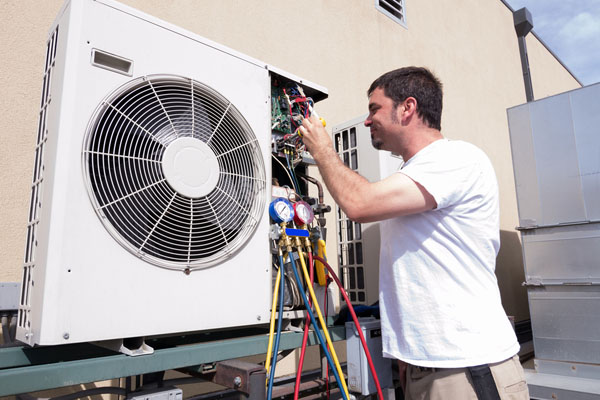
HVAC contractor connecting wiring on ductless mini-split system

An energy-efficient and popular choice for heating and cooling your home or business are ductless mini-splits. They have two components, the outdoor unit, and the indoor unit. The outdoor unit contains the condenser and the compressor. The indoor unit provides warm or cold air in the different zones of the house.

Installing a mini-split is simple when you compare it to installing central heating and cooling. But, they are a bit more complicated than window ACs that you just plugin. Mini-splits require proper wiring and connections to the house’s electrical panel. If you think a mini-split system is ideal for your home, contact an HVAC professional for installation. A professional will be able to do the ductless installation properly, including the ductless mini-split wiring. They have lots of training and experience and they can make sure your mini-split works at its optimal performance and capacity.

Learn More About Mitsubishi Ductless Systems Call To Schedule A Free, In-Home Estimate

Ductless Heat Pump Wiring: Things You Should Know

To make sure your mini-split has the proper wiring, keep reading. This article discusses all you need to know about the wiring that is essential during a ductless installation.

Electrical Service

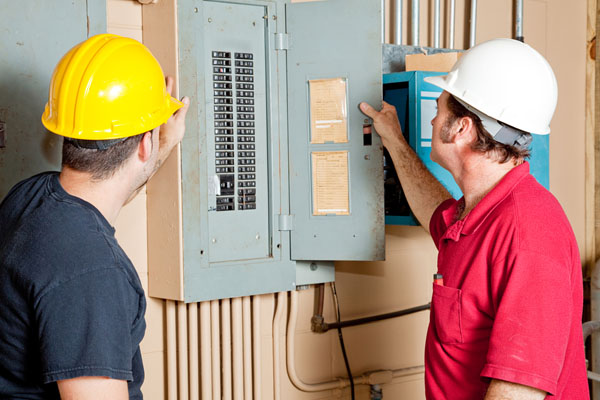
hvac technicians updating circuit breaker for ductless install

The electrical service panel provides power to the outdoor unit. It uses a surge protector and a disconnect box for safety. These connect with electrical wires that are in a weather-proof wire or a whip.

Different mini-splits have different power requirements depending on the model and size. Most systems typically need 220 volts or higher, but some 9k to 12k systems may only need a 110-volt service. It’s important the breaker panel can take on additional voltage since these systems connect to the electrical service panel.

To ensure the proper installation of your mini-split, contact a professional technician to wire your system.

Call Today: (800) 253-9001 Learn More About How Ductless Systems Work

Wire Gauges

Mini-splits require specific wire gauge or thickness. It’s important that the connecting wires are quality and are the right gauge. If not, it can be potentially dangerous. Also, check to see if the connecting cable is UL-listed and has been evaluated for sun exposure. UL-listed wires have passed the Underwriters Laboratories’ safety tests. An expert technician will be able to make sure your electrical wiring meets these requirements.

The standard wire sizes are 2, 6, 8, 10, 14, and 16-gauge wire. The thickness determines how much current can safely pass through the wire. The thicker wire has a lower wire gauge and it can handle more current. On the other hand, the thinner wire has a higher wire gauge that can conduct less current. For example, a #6 cable can run 60 amps, while a #14 wire can only handle 15 amps.

Connecting Cable

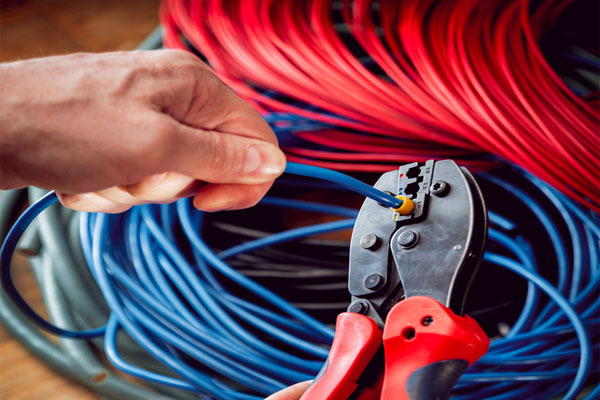
electrical wires for ductless hvac system

A connecting cable (AKA a four-conductor cable) is a special type of wire that goes between the indoor and outdoor units. It supplies power and carries information between these two components. Most mini-splits use a 14 AWG 4-conductor stranded cable that is run through a conduit to abide by the local codes.

Disconnect Box: Non-Fused Versus Fused

A disconnect box, otherwise known as a switch box or a fuse box, holds the controls which supply energy to your mini-split. It has easy access for an HVAC professional to turn off the power to your mini-split. Disconnect boxes are required by code.

Many homeowners like non-fused disconnect boxes rather than a fused one. A reason for this is because the breaker in the service panel has the same protection a fuse would provide. Also, homeowners can reset circuit breakers, but a fuse needs to be replaced. Fuses can be damaged by the elements too, which makes them unsafe.

Learn More Mitsubishi Ductless Mini-Split Systems Call To Schedule A Free, No-Obligation Consultation

Electrical Whip

Electrical whips are located outdoors. They are made up of high-voltage wires hidden in a case that protects it from the sun, rain, and other elements. They connect the 120v/220v power between the disconnect box and the condenser.


How An HVAC Contractor Wires A Ductless Mini-Split

image of a ductless hvac installation

Now that you know about the different types of wiring your mini-split requires, the next step is wiring your mini-split correctly. This is a great challenge, so it is best to contact a licensed HVAC contractor to do this work.

These are the steps a professional will take when installing your mini-split system:

Step 1: Install A Disconnect Box

Installing a disconnect box is necessary to adhere to code. A professional will run a 230/208- or 155-volt line from the home’s primary break box to the disconnect box next to your unit. A technician will also ensure that the voltage requirement is met because each system is different.

Next, the HVAC contractor wires the hot leads to the fused connections in the ground and the box to the provided connection. Then, the faceplate on/off switch is attached.

Step 2: Attach The Electrical Wire Whip

The electrical whip is run from the disconnect box to the unit. An electrical whip is necessary to meet the code.

Call To Schedule A Ductless Consultation

Step 3: Connect The Wires

According to your unit’s specifications, the electrical wires will be connected. Each mini-split has slightly different connections based on the make and model. Your HVAC technician will be able to identify the wires and wire everything correctly.

Step 4: Connect The Wires From The Indoor Unit To The Outdoor Unit

Single-zone and multi-zone units have a different number of connections. If it is a multi-zone unit, professionals typically number the indoor units for easy cross-referencing. Each wire has a specific number so the technician can make sure each indoor unit connects to the input that it’s wired to. This is important because otherwise, your mini-split will not function properly.

Step 5: Connect The Wires In The Indoor Unit

The HVAC contractor will need to make the connections in the correct order just like the outdoor unit. The HVAC contractor will connect the main wires and the ground wire to the right terminals. A round crimp-style terminal ensures that the connection is secure. A technician can if this is necessary for your installation process.

This is the last step of the electrical part of the installation. Do not hesitate to talk with your HVAC ductless installation expert if you have any more questions or concerns about your mini-split system.

Learn More Mitsubishi Ductless Heat Pumps Call To Schedule A Free Ductless Consultation


Protecting Your Investment

HVAC systems are a considerable investment. Manufacturers offer warranties that cover a range of unfortunate circumstances like manufacturing defects, but they usually do not cover damages from electrical surges.

A lightning strike, a power surge, or an irregularity in the power supply can cause a power surge. This can cause detrimental damages to the electrical components in your mini-split system, or even complete system failure. If this happens, you’ll need to replace your mini-split even one that is only a few years old.

The only way to prevent this is to install a surge protector. They are very easy and quick to install. An HVAC technician can install one in just over 10 minutes. Surge protectors will give you the peace of mind and protection of your warranty.

Explore Ductless HVAC Systems Call To Schedule A Free Ductless Consultation

Conclusion

For an easy and hassle-free mini-split installation, contact a licensed and qualified professional. Their training and experience will guarantee your mini-split is wired accurately. You can rest easy with the knowledge that your mini-split will work at its optimal efficiency.

Check Out One Of Our Ductless Installation Projects

Mitsubishi Ductless Installation Project In Rocky Hill, New Jersey

Explore Our Case Studies

Call PFO Heating & Air Conditioning To Learn More About Ductless HVAC Systems

PFO Heating & Air ConditioningInterested in learning more about ductless HVAC systems? For all your HVAC system needs, call PFO Heating & Air Conditioning today. Our technicians are all NATE-certified, and they have a great deal of experience. They’ll also determine what your home comfort needs are and find the best and most affordable solutions to meet them.

As a full-service HVAC company, PFO Heating & Air Conditioning offers an array of HVAC services. This includes heating and cooling installations, tuneups, repairs, and much more. We offer free, in-home consultations. Call now to schedule an appointment.

Call Now: (800) 253-9001 Read Our Reviews

Click here to contact us now or call us at (800) 253-9001 to find out more!

The post Ductless Mini-Split Wiring appeared first on PFO Heating & Air Conditioning.


from PFO Heating & Air Conditioning https://www.princetonfuel.com/blog/ductless-mini-split-wiring/?utm_source=rss&utm_medium=rss&utm_campaign=ductless-mini-split-wiring
via IFTTT

Monday, July 13, 2020

Ductless Condensate Pumps: What You Need To Know

image of an indoor air handler and condensate pump

Condensation occurs when vapor is converted to liquid. Air condenses into water droplets on a cold surface when hot air comes in contact with it. An example you might recognize is when you go out with a cold can of soda on a hot day. The droplets you see on the can are formed as the humid air is cooled beyond its dew point.

Mini-splits are a great cooling solution that can capture humidity in your home and release it outside. They allow you to have cooler and drier air indoors. In this article, we discuss what you need to know about the ductless condensate pump.

Learn More About Mitsubishi Ductless Systems Call To Schedule A Free, In-Home Estimate

Is Condensate Harmful?

image of condensation on window

When condensation is not removed correctly it can create a multitude of issues. Water droplets can pool up and cause harm to your walls, floors, and ceilings. They can also result in mold growth which can have a negative effect on your home and your health.

Repairing damages is very expensive. It is best to install the proper system to drain condensation away from the house before any issues occur.

Call Today: (800) 253-9001 Learn More About How Ductless Systems Work

How Do Mini-Splits Remove Condensate?

image of a ductless hvac installation

Commonly, mini-splits use a gravity-draining tube to remove condensate. Others need to use pumps. Keep reading to find out some of the ways mini-splits remove condensate:

Pipe Runs

Floor and wall-mounted units do not use condensate pumps. These units utilize gravity to drain any water, and therefore the drain line needs to slope downwards.

Make sure that the drain line is around half an inch higher than it is outside than inside. This will make ensure the line is angled downwards and will be able to remove the moisture properly.

Drain Tubes

Most wall-mounted and floor-mounted units use drain tubes. It is a common way to remove condensation. The tubes use a 5/8″ inner diameter vinyl tubing.

Vinyl drain tubes are very useful, you just need to be careful they don’t get kinked. If they do kink, the water will not drain correctly and it may possibly overflow and harm the indoor air handler. To avoid this, use a braided tube that will not kink as easily.

Learn More Mitsubishi Ductless Mini-Split Systems Call To Schedule A Free, No-Obligation Consultation

Pumps

Sometimes the circumstances do not allow for gravity drainage. Instead, a condensate pump is needed. These pumps use 1” or 1 to 1/4″ PVC rather than the usual tubing which lets the pump maintain slope over a horizontal run.

You can connect multiple indoor air handlers to one drain line. If you choose this route, check with a professional technician to see if the line can handle the amount of water all the units will produce.

Ceiling suspended, concealed ducted, and ceiling cassette units often have built-in lift pumps. However, wall-mounted and floor-mounted models tend to be mounted high enough on a wall so they can drain condensate without using a pump. But, a unit installed on the ground level will need a condensate pump to move the water elsewhere.


What Are The Basic Components Of A Ductless Condensate Pump?

The float switch and the reservoir make up a condensate pump. The reservoir is connected to the drain pan where it collects water while your mini-split unit cools.

Once the condensate reaches a specific level, the condensate pump is turned on by the built-in float switch. When the condensate pump isn’t working correctly, the float switch will turn off the indoor air handler which will make sure the condensate does not overflow.


Types Of Condensate Pumps For Ductless Heat Pumps

The main goal of all condensate pumps is to eliminate condensate. There are different types that have different benefits though. Continue reading to learn about the different pumps and to see which one will be best for you and your home.

Standard

The standard style of condensate pumps is compact and discreet. The indoor air handler and reservoir are hidden out of sight. It does not make much noise while operating and it will work well with your other applications.

Call To Schedule A Ductless Consultation

Low Profile

If you want a condensate pump that is kept out of sight, then consider a low profile one. These are fitted in a way that they are completely out of view. They are slim units and designed to be inconspicuous.

High Suction

High suction condensate pumps are similar to the standard one. The main difference is high suction pumps have more suction power that can move condensate further and higher. These are ideal if the indoor unit is below ground level and water needs to be moved to a higher level before it can be drained. If you want to minimize noise, these pumps can be installed away from your living area.

Surface Mounted

Surface-mounted condensate pumps are installed under the mini-split system. The pump and reservoir are located in a compact box right outside the unit. A surface mounted pump has easy access to repair or clean it. Surface-mounted condensate pumps are a great option if you need to access the reservoir frequently.

Four Common Ductless Condensate Pump Installation Mistakes

woman enjoying ductless air conditioner

Mini-split condensate pump installation can be challenging without the correct tools, experience, and knowledge. Any errors can result in damage to the equipment and its functionality. Some common errors include:

Pump Omission

Some mini-split systems do not have a condensate pan since the water is drained with gravity. But, in some situations, gravity draining is not possible and a condensate pump is necessary. If you don’t have a condensate pump when you actually need one, you could run into difficulties like the drain pan overflowing.

Pump Selection

Oftentimes, people do not choose the right pump that is compatible with their mini-split system. This can cause issues like high levels of noise and poor performance. It can also make ductless installation and maintenance harder.

An example of this is choosing a large wall-mounted pump that is not designed for mini-splits.

Learn More Mitsubishi Ductless Heat Pumps Call To Schedule A Free Ductless Consultation

Wiring

Condensate pumps use line-voltage power that is connected with the mini-split unit’s electrical terminal. Each mini-split unit has different pump wiring requirements depending on the system. Therefore, Not one diagram can show all the wiring for each mini-split make and model. Incorrectly wiring a condensate pump is a common error because of this.

Siphoning

The last typical installation error is routing the discharge line that makes a siphon incorrectly. Siphons cause airlock, which can damage the pump, restrict draining, or overflow the pump.

Some condensate pumps come with anti-siphoning devices at no additional cost. Anti-siphoning devices are two-inches long and made of molded plastic fitting to prevent the pump from auto-siphoning. It can be installed horizontally or vertically.


Does A Professional Need To Install A Condensate Pump For My Ductless System?

If you don’t know which condensate pump is right for you, the best option is to get in touch with a professional and licensed ductless installation company. They will be able to assist you in choosing the right installation since they have the proper experience and tools.

Having your system installed professionally is the only way to guarantee that it will work properly and at maximum capacity for a long time. It will also make sure the warranty remains in case any damage occurs.

Check Out One Of Our Ductless Installation Projects

Mitsubishi Ductless Installation Project In Rocky Hill, New Jersey

Call PFO Heating & Air Conditioning To Learn More About Ductless HVAC Systems

PFO Heating & Air ConditioningInterested in learning more about ductless HVAC systems? For all your HVAC system needs, call PFO Heating & Air Conditioning today. Our technicians are all NATE-certified, and they have a great deal of experience. They’ll also determine what your home comfort needs are and find the best and most affordable solutions to meet them.

As a full-service HVAC company, PFO Heating & Air Conditioning offers an array of HVAC services. This includes heating and cooling installations, tuneups, repairs, and much more. We offer free, in-home consultations. Call now to schedule an appointment.

Call Now: (800) 253-9001 Read Our Reviews

Click here to contact us now or call us at (800) 253-9001 to find out more!

The post Ductless Condensate Pumps: What You Need To Know appeared first on PFO Heating & Air Conditioning.


from PFO Heating & Air Conditioning https://www.princetonfuel.com/blog/ductless-condensate-pump/?utm_source=rss&utm_medium=rss&utm_campaign=ductless-condensate-pump
via IFTTT

Monday, June 22, 2020

Ductless Line Sets

image of a ductless hvac system in a bedroom

A ductless line set connects the outdoor condenser and the indoor air handler. They are essential to the heating and cooling process of mini-splits since they transport refrigerant in and out of the indoor and outdoor units. Therefore, you should select a ductless installation company that selects and installs line sets properly. Otherwise, your mini-split will not function as necessary.

In this article, we will help you learn everything you need to know about ductless line sets for your mini-split system.

Learn More About Mitsubishi Ductless Systems Call To Schedule A Free, In-Home Estimate

What Is A Line Set?

image of a ductless line set

A line set is made of two copper tubes that connect the condenser to an indoor air handler. The copper tubes come in two different sizes, with one line larger than the other. The smaller tube is called the liquid or discharge line. This line is responsible for moving the dense liquid refrigerant to the indoor unit where it absorbs heat. Secondly, the larger tube is referred to as the suction line. It carries the gaseous refrigerant to the condenser where the heat is released.

The liquid and gaseous refrigerant continuously circulate between both lines to provide you with conditioned air. The flow is reversed when you need heat, depending on if you need heating or cooling.


Single-Zone And Multi-Zone Ductless Configurations

If your house has a single-zone unit, it’s only necessary to buy a single line set. But, if you have a multi-zone system, then you will have to purchase one line set per indoor unit. You also have to take a few things into consideration, such as the total line length, distance, and diameter of each set. Otherwise, your system may not function properly. A professional HVAC contractor can determine this for you before any installations take place.

Branch Box

Some multi-zone units need a branch box to provide refrigerant from the condenser to the indoor units. Because of this it needs its own line set to connect with the outdoor unit. Branch boxes are manufacturer-specific which means not all branch-box combinations are supported. Therefore, it is essential you choose a trusted HVAC installation company to make sure they select the correct branch box for your unit.

Call Today: (800) 253-9001 Learn More About How Ductless Systems Work

Port Adapters

The HVAC contractor may additionally recommend a port adaptor. This helps make a connection if the diameter line is not the standard fitting on your mini-split. Some homeowners think these adapters can restrict the refrigerant flow. There is no need to worry because the adapters are designed to allow the proper flow of refrigerant. By using a port adapter, the HVAC contractor won’t have to modify the current line you have. These adapters allow an HVAC contractor to use the correctly-sized line without having to worry about the fitting size.

It’s important to remember that the ductless installation company you choose should follow the manufacturer’s recommendations strictly when it comes to the sizing of refrigerant piping connections. Installing a ductless mini-split system is not something you should do yourself. It requires the knowledge and expertise of a licensed HVAC contractor.

Line Set Accessories

mitsubishi heating and cooling system

Using a few line set accessories will to help make your mini-split experience easier:

Rectorseal NoKink

The Rectorseal NoKink has a flexible connection between the refrigerant line and the mini-split evaporator. It’s easy to install due to its NoKink technology and three-inch copper stub. It will prevent the refrigerant line from kinking which saves time and labor costs. Also, it helps ensure that your unit is running at its optimal efficiency.

Ball Valve

Another helpful accessory is a ball valve. It is designed to easily suspend refrigerant flow without needing to remove the seal cap. It makes servicing the refrigerant lines fast and simple. This accessory also has a Schrader valve for fast charging. A ball valve is necessary for multi-zone systems because it allows the system to be serviced without needing to remove the refrigerant out of the lines.

Line Set Covers

ductless hvac system line set cover

A line set cover hides and protects the copper line set of your mini-split. Without this accessory, your line set is exposed to natural elements like direct sunlight and rain. UV rays can accelerate the deterioration of your line sets. Therefore, a line set cover protects against these elements and any weather conditions.

A great perk of a line set cover is that it is completely paintable. So, you can match its color to your wall or paint it in any design you want. This is an excellent way to blend your line set cover into your home’s aesthetic.

Learn More Mitsubishi Ductless Mini-Split Systems Call To Schedule A Free, No-Obligation Consultation

Line Set Sizing

Line sets come in multiple sizes. The sizing is determined by factors such as the number of evaporators, the mini-split make and model, the distance between units, and the condenser size. The size of the line set is predetermined by the manufacturer. To make sure you get the exact sizing requirements needed for the mini-split you purchased, choose a ductless installation company with a lot of experience.

Diameter

image of a ductless mini-split system installation
The size of the line set is determined by the size of your mini-split. The higher the British thermal unit (BTU) or tonnage, the larger the diameter line set needs. Mini-splits sizes are indicated by numbers. The first number indicates the diameter of the liquid line, and the second number is the diameter of the suction line. For example, a large line set has a 3/8″ liquid line and a 3/4″ suction line. A smaller line set has a 1/4″ liquid line and a 1/2″ suction line.

Distance

The maximum line set length needed by your mini-split is called the distance. It’s important for the HVAC contractor to determine the length because it impacts where your outdoor and indoor units will be located. When they measure the distance, make sure they consider the corners and bends in your house, and also the wall thickness and the vertical rise to get an accurate measurement.

Choosing an inexperienced ductless installer will inevitably lead to an issue after they have installed your mini-split. Your indoor unit may be placed too far from the outdoor unit. If this happens, your unit will not operate properly because it will exceed the maximum length required.

Call To Schedule A Ductless Consultation

Refrigerant

Something else that affects the refrigerant in the line set is the distance between the outdoor and indoor units. A mini-split is already charged with the required refrigerant when you purchase it. Usually, the factory charge is enough for the majority of installations. But, if your unit needs a longer line set then the HVAC contractor might need to add more refrigerant to make sure your mini-split operates at its maximum capacity. To make sure you have the right amount of coolant for your ductless installation, hire an experienced HVAC contractor.


Quality

Ensure your line sets are built to last by checking with your HVAC contractor that they are the highest quality line sets. Also, check to see if the line set underwent annealing. Annealing is a heat-treating process that allows the copper to flex without breaking or kinking. Also ensure your line set has a manufacturer warranty of at least five years.

A high-quality line set also has flared ends. This allows for an easier installation because your HVAC contractor will not have to braze it. Also, it should come equipped with at least half an inch thick insulation. Additionally, make sure the UL is rated for fire and smoke is listed for weather resistance. These qualifications assure that your line set is safe to use.

Learn More Mitsubishi Ductless Heat Pumps Call To Schedule A Free Ductless Consultation

Incorrectly Sized Line Sets

If your line set is improperly sized, you are bound to encounter some problems. Some of the main issues if the line sets are either too small or too big include:

Undersized

If the suction line in your line set is too small, it results in not enough operating pressure. In turn, it will hinder your mini-split system’s capacity and efficiency. It can also lead to a shorter system lifespan.

Furthermore, an undersized liquid line means that the indoor and outdoor units won’t receive the proper amount of refrigerant. The unit’s operating pressure will be affected by this as well. This results in your system not correctly functioning to its maximum capacity.


Oversized

Besides the possibility of the line being undersized, it can also be too big. This means that the refrigerant pressure will be lower than what is needed. The liquid might not be transported back to the compressor as efficiently as well. Consequently, the compressor will not operate correctly because there won’t be enough refrigerant to help the compressor release any built-up heat.

An oversized liquid line can hold a larger amount of refrigerant. But, the liquid will become easily diluted. The compressor can end up damaged due to the shortage of refrigerant.

Explore Mitsubishi Ductless HVAC Systems Call To Make An Appointment

Conclusion

For your mini-split system to work at its optimal performance and maximum efficiency, it’s essential to have the proper supporting components. Making sure your line set is properly sized and installed is crucial to your unit’s overall functionality. Always work with an HVAC company that correctly follows the manufacturer’s guidelines during installation.

An experienced HVAC contractor can help you buy the right unit and line sets and test the newly installed mini-split. With professional assistance, you will soon have the home comfort you deserve.

Check Out One Of Our Ductless Installation Projects

Mitsubishi Ductless Installation Project In Rocky Hill, New Jersey

Call PFO Heating & Air Conditioning To Learn More About Ductless HVAC Systems

PFO Heating & Air ConditioningInterested in learning more about ductless HVAC systems? For all your HVAC system needs, call PFO Heating & Air Conditioning today. Our technicians are all NATE-certified, and they have a great deal of experience. They’ll also determine what your home comfort needs are and find the best and most affordable solutions to meet them.

As a full-service HVAC company, PFO Heating & Air Conditioning offers an array of HVAC services. This includes heating and cooling installations, tuneups, repairs, and much more. We offer free, in-home consultations. Call now to schedule an appointment.

Call Now: (800) 253-9001

Click here to contact us now or call us at (800) 253-9001 to find out more!

The post Ductless Line Sets appeared first on PFO Heating & Air Conditioning.


from PFO Heating & Air Conditioning https://www.princetonfuel.com/blog/ductless-line-sets/?utm_source=rss&utm_medium=rss&utm_campaign=ductless-line-sets
via IFTTT

Monday, June 8, 2020

Line Set Covers For Ductless Mini-Split Systems

ductless hvac system line set cover

Installing a line set for your mini-split ductless system gives it a clean, professional finish. Additionally, it provides performance benefits that make it a great accessory to add to either your current mini-split system or a new ductless system.

We will discuss ductless line set covers in this article, including what they are and how they can help your ductless system.

Learn More About Mitsubishi Ductless Systems Call To Schedule A Free, In-Home Estimate

What Are Line Set Covers?

A ductless mini-split system uses a set of copper lines or tubing that carry refrigerant from the system’s outdoor compressor to an evaporator located inside the indoor air handler. This line set includes two separate lines: a liquid line that is smaller and a suction line that is a bit larger. Unfortunately, when a mini-split system is installed, the line sets are often exposed to the outdoor elements leaving them vulnerable to faster corrosion than they would be if they were protected.

A line set cover protects, not only the line sets but the cable and drain tubing as well, from the damage caused by the elements. This can include UV rays which, with time, can lead to a breakdown of the insulation on the line sets. The cover’s design gives it weather resistance, enabling your ductless system to keep operating in top shape. This is true, even during some of the harshest weather.

Line Set Cover Parts

mitsubishi heating and cooling system

There are different parts that comprise a line set cover in order to ensure it is correctly installed. These parts include:

  • Split line tube – this is what protects and hides the drainpipe, connecting wire, and line set from outdoor elements.
  • End socket – the part that seals the cover to the unit’s condenser.
  • Vertical elbow – an HVAC contractor uses this part if turns are needed during the mini-split’s installation, such as going around corners or through soffits.
  • Horizontal elbow – when turns in a wall are necessary, this part is used to facilitate the turn. Typically, this occurs when there are obstacles in the way, such as the need to avoid a window.
  • Coupling/socket – this is the part that is essential when connecting two different split line tubes in order to create a straight run between components.
  • Wall cover-the cover seals holes and gaps around areas where the line set penetrates a wall.
Call Today: (800) 253-9001


Line Set Cover Features

There are some standard features that line set covers offer to help you better manage your ductless mini-split system. These features include:

Versatility

There is nothing very stylish about a line set and it can certainly ruin the aesthetics and look of a room. Fortunately, a line set cover can help because it allows you to cover the line set and conceal it from view. Additionally, because these covers are easily paintable, it’s possible to paint the cover and have it blend seamlessly into the wall. Some manufacturers also offer custom wraps ensuring that you can create the look you desire. Rest assured, line set covers have been created for commercial and residential use, so you won’t have to worry that your office or home will not have a neat and clean look.

ductless heating and cooling system


Convenient

A line set cover is built to meet specific energy code requirements. Additionally, covers come with an easy peel-off protective film, helping it to stay clean as well as making it easy to clean when necessary.

Adjustable

You’ll also find line set covers designed to handle multiple line sets, something that is especially useful when your home is equipped with multi-zone configuration. Some covers offer the quick snap cover ensuring that it won’t accidentally pop off.

Call Today: (800) 253-9001 Learn More About How Ductless Systems Work

Durable

As an added benefit, these covers have a thick wall to ensure they are very durable. The line set covers are processed in such a way that they are able to withstand UV rays and deliver the protection to the line set as they are intended to do. They also include no-rust screws as well as a glossy finish, helping to ensure the cover will last a very long time, regardless of the outdoor elements.

ductless for commercial use


Mitsubishi Line-Hide

The Line-Hide system created by Mitsubishi has a design that conceals as well as protects the mini-split’s copper line set while also controlling the necessary wiring for proper operation of the system. UV rays and outdoor elements can cause the insulation in line sets to break down faster than it should. The line-hide provides a barrier for covering the line set. This prevents it from exposure to any of these harmful elements.

Mitsubishi manufactures Line-Hide with quality PVC containing UV inhibitors, ensuring it is ideal for all types of outdoor weather conditions. A Line-Hide is also easy to paint using just about any kind of household paint, so you can paint it to match your home’s exterior. Additionally, an HVAC contractor can install a Line-Hide indoors because it meets UL94v-0 requirements for indoor applications.

The Line-Hide is available in a variety of sizes. Therefore, it’s easy to get one that will offer the fit you need, regardless of the cover diameter. A Line-Hide is also very easy to install because its modular design includes snap-on parts. When screws are necessary for installation, they are included. You can use them wherever you have wires, pipes, or cables, that you want to hide.

Learn More Mitsubishi Ductless Mini-Split Systems Call To Schedule A Free, No-Obligation Consultation


Check Out One Of Our Ductless Installation Projects

Mitsubishi Ductless Installation Project In Rocky Hill, New Jersey

Conclusion

After your mini-split installation, using a line set can help keep it protected. It will not experience the wear and tear that come with day-to-day weather conditions that cause damage. Of course, it also ensures that your line set looks neat and clean. You won’t see a group of wires simply hanging down the walls of your home.

A professional HVAC company will be able to install the line set covers, ensuring that you get the right one. They will make sure that it fits your specific line set while also giving you the aesthetic look you desire. This will also ensure that all aspects of your mini-split are working perfectly. Your system will be ready to provide comfort and energy savings for you all year round.

Call To Schedule A Ductless Consultation

Call PFO Heating & Air Conditioning To Learn More About Ductless HVAC Systems

PFO Heating & Air ConditioningFor all your HVAC system needs, call PFO Heating & Air Conditioning today. Our technicians are all NATE-certified, and they have a great deal of experience. They’ll also determine what your home comfort needs are and find the best and most affordable solutions to meet them.

As a full-service HVAC company, PFO Heating & Air Conditioning offers an array of HVAC services. This includes heating and cooling installations, tuneups, repairs, and much more. We offer free, in-home consultations. Call now to schedule an appointment.

Call Now: (800) 253-9001

Click here to contact us now or call us at (800) 253-9001 to find out more!

The post Line Set Covers For Ductless Mini-Split Systems appeared first on PFO Heating & Air Conditioning.


from PFO Heating & Air Conditioning https://www.princetonfuel.com/blog/line-set-covers-ductless-mini-split/?utm_source=rss&utm_medium=rss&utm_campaign=line-set-covers-ductless-mini-split
via IFTTT

Tuesday, May 26, 2020

Should My Furnace Smell Like Heating Oil?

woman who smells heating oil in her home

Heating oil is used by many American homeowners to fuel their furnaces. It is highly efficient to use without burning a hole in your wallet. It helps ensure that you and your family are safe and warm during the cold winter months. However, you might be worried when you detect the distinct heating oil smell around your home. An excellent containment system in your home should prevent the smell in the first place smell. Even if you happen to smell it, the odor should dissipate soon. In the situation that it persists, call a certified and licensed technician from PFO Heating & Air Conditioning to help you find the cause. Our expert technicians can resolve it right away.

Explore Our Home Comfort Services Call To Schedule A Free, In-Home Estimate

Is It Normal to Smell Heating Oil?

A heating oil smell should not linger inside your home. However, there are instances where this can happen. It can be due to a small issue wherein the smell will disappear quickly. It can also be because of something more severe, causing the smell to persist. Listed below are a few reasons that cause this problem:

Oil Tank Was Refilled Recently

image of a heating oil delivery at a home

When you just got your oil tank refilled, it isn’t unusual that you catch a whiff of oil in the air for some time. The faint smell should only take a couple of days to disappear on its own. However, if it takes more than that, then it could be that the delivery crew spilled some oil on the ground. If this is the cause, you can try using an absorbent material to prevent further spread. Take away any damaged materials and then use soap and water to scrub the surface clean.

PFO Heating & Air Conditioning has the most dependable and safest heating oil deliveries in the area. We guarantee that all our delivery services will be done without any worries. Call us today for all your heating oil delivery concerns.

Call Today: (800) 253-9001

Initial Furnace Use

Heating systems are not in use during the hot months. They are only put in use again at the start of the cold season. Hence, it is perfectly normal for you to smell oil when you switch your furnace on again after being idle for so long. The smell should be fleeting, so there is no reason to worry.

Furnace Filter Blockage

image of an oil-fired furnace filter replacement

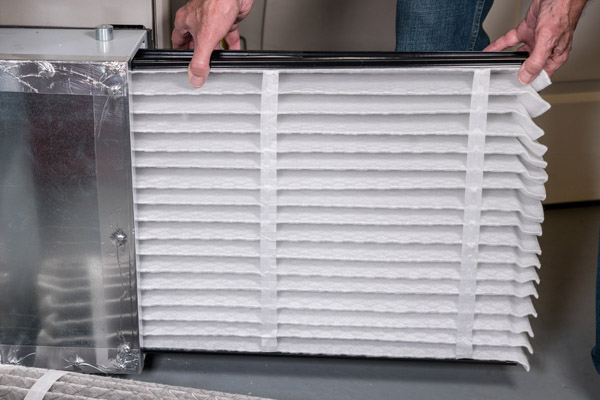
A clogged furnace filter can be another reason for the oil smell. Keep in mind that replacing your HVAC air filter should be done at least once every two to three months. Examine your oil furnace filter if it is what is causing the issue. If the smell persists even after you changed it, then your furnace might be dealing with another problem.


An Underlying Furnace Problem

An underlying issue like inefficiency can be what is causing the smell of oil to circulate throughout your home. The oil might have failed to combust entirely, and the oil dregs might be causing the odor to persist. You should also check the oil burner to see if there are any cracks. If there are cracks, fumes can escape through these. Heat exchanger failure can also be another cause. Whatever it might be, an expert HVAC technician can help you find the root cause and solve it immediately. Rest assured that the HVAC professionals from PFO Heating & Air Conditioning have the knowledge, skills, and qualifications to help you.

Learn More About Our HVAC Repair Services Call To Make An Appointment

Is An Oil Smell Dangerous?

As a homeowner, it is only natural for you to be concerned about the smell and how it could impact your health. This is especially an issue for homes that have their oil tanks installed in enclosed spaces, such as their basements. Fortunately, heating oil fumes are far less toxic than natural gas fumes. Therefore, inhaling low concentrations is not as harmful. However, it is always best that fumes are avoided at all costs. Furthermore, oil is also stable in that there is no need to worry about explosions at all.

Any symptoms you have from short-term exposure should disappear as soon as the oil smell is eliminated. Whereas, you should make sure that you are not exposed to fumes for long as it can have severe health repercussions. If you notice the lingering smell of oil in your home, call an HVAC technician immediately. Ignoring it can cause the issue to escalate into a more significant problem.

What To Do If You Smell Heating Oil

woman asking about dangers of heating oil

Once you notice the smell of heating oil permeating around your home, go over the list mentioned above, and do the recommended actions. Make sure to ventilate your home so that the smell can dissipate quickly. Do this by opening windows. Keep children and pets out of the contaminated area so as not to compromise their health.
These are just a few basic steps to mitigate minor issues. If you find that you are dealing with more than you can handle, contact an expert to help you. There are times when your heating equipment is experiencing more than what is perceived by your eyes and nose. A technician is your best bet in determining and resolving the problem as soon as possible.

Learn More About Our Heating Oil Deliveries

Conclusion

Our sense of smell can warn us about the dangers that we might not hear or see. This way, the problem is detected and solved early on. It prevents the issue from escalating into something irreparable or potentially dangerous. Therefore, you shouldn’t neglect the smell of heating oil once you catch a whiff of it. Find the cause immediately, as this is not normal. Common causes are starting your furnace after a long period of not being used and a spill during oil delivery. An HVAC expert should be able to help you pinpoint the cause and fix it immediately.

Call PFO Heating & Air Conditioning For Superior Home Comfort Solutions

PFO Heating & Air ConditioningWhen you need high-quality heating oil and HVAC services in Mercer County, NJ, call PFO Heating & Air Conditioning. We hire only the best licensed and NATE certified technicians who can conduct superior furnace tune-ups, boiler repairs, mini-split installations, and more. All our friendly techs are equipped with the right tools, extensive knowledge, and years of experience to ensure that all services are done promptly and correctly.

PFO Heating & Air Conditioning offers affordable heating and cooling service prices in the area. We guarantee that our experts can provide you with the most advanced solutions to ensure that all your home comfort needs are met. All of our services are backed with a guarantee to ensure your satisfaction.

Our company also offers fast and affordable fuel oil deliveries so that you are safe and warm all winter long. We have various oil delivery plans and financing options to meet your needs. Schedule an appointment by giving one of the representatives from PFO Heating & Air Conditioning a call. We offer no-obligation, in-home consultations.

Call Now: (800) 253-9001

Click here to contact us now or call us at (800) 253-9001 to find out more!


The post Should My Furnace Smell Like Heating Oil? appeared first on PFO Heating & Air Conditioning.


from PFO Heating & Air Conditioning https://www.princetonfuel.com/blog/heating-oil-smell/?utm_source=rss&utm_medium=rss&utm_campaign=heating-oil-smell
via IFTTT